The Art of Pairing Food and Fitness

Last Updated: February 24th, 2020

Are you attending the gym regularly but not seeing the results that you would like to? Are you attempting to gain muscle, slim down, or tone certain parts of your body? You may be doing all of the right things in the gym. This is the real question: what are you eating? Food plays much more of a role in your ability to see results than you may think. If you are looking to better understand the quantity of protein, carbs, fat, etc. you are consuming, this dieting calculator is a great tool to help you know what your body needs and what you should be putting into your body based on your age, gender, body type, etc.
If you have struggled to align your eating habits with your workouts, or if you are simply looking for some fantastic expert tips, this is the article for you.
Breakfast
To give yourself the chance to stay on-target with your goals, you should make a conscious effort to eat a good breakfast every day. Thea Boatswain, owner of Elan Fitness and Nutrition, recommends that you avoid sugary cereals for breakfast and that you focus on protein rich foods like these examples:
- Whole wheat toast with peanut butter and bananas
- Pancakes with an egg
- Greek yogurt with berries
Protein
Over the past decade it has become more common knowledge that protein helps build muscle and helps the body stay full longer. The gray space that still exists for many people is knowing how much protein they should consume to not only be healthy, but to help achieve their fitness goals.
Joe Flanagan, fitness app developer at GetSongbpm, recommends consuming a mixture of around 30 grams of carbohydrates and 20 grams of protein within two hours of finishing your workout. This is a consistently recommended amount of protein from a number of experts. Some may recommend a bit more depending on you personal goals and current health.
Often times when we hear “Eat 20–30 grams of protein in one meal” we can get overwhelmed. How on earth are we going to find foods that provide us that much protein without eating enough to explode?
Rima Kleiner is an MS, RD, and blogger running a blog entitled Dish on Fish. Kleiner is an expert at helping people sneak protein-dense foods into their diets where they otherwise might not. The following are a few ways that you can try to do the same:
- Add nuts or seeds to your cereal or oatmeal
- Put salmon and cucumber on your whole grain toast
- Incorporate beans and tuna into your salad at lunch
- Add some high-quality yogurt to your snack of fruit
- Toss some shrimp into your pasta dinner
Pre-workout foods
Sunny Akhigbe was born in Nigeria into difficult circumstances. At times, the challenges seemed too hard to bear, but in his time of need, Sunny found the bodybuilding industry.
Today, Akhigbe is a IFBBPro competitor, certified fitness coach, model, author, and owner of Sunny Biggy Fitness based in Chicago. When it comes to physical fitness and health, Akhigbe feels very strongly about consuming a nourishing diet.
He recommends this pre-workout meal for both men and women:
- 2+ egg whites
- Asparagus
- 1+ slices of whole wheat toast (No butter, but can use natural jams)
- Optional additions: ½ of an avocado, tomatoes, or pickles
The portions/amounts of each of these foods differ depending on gender, body composition, and the total amount of calories one plans to burn each day.

Post-workout foods
Though pre-workout foods are very important, it is crucial that after working out you replenish your body with the nutrients that it needs. This will help you to build muscle, maintain energy levels, and avoid overload exhaustion. The following fitness experts provide important recommendations for how to recover nutritionally form a workout:
Jess Cifelli
As a Master CycleStar and Nutritionist at CycleBar, Cifelli works hard to help those she works with to consume foods that will help them meet their goals. She describes the following as “Trainer-approved fuels”:
- Greek yogurt or cottage cheese with fresh berries
- Tuna and crackers
- Lean meat and a sweet potato
- Hard boiled eggs with a side of fruit
- If access to a quick meal isn't readily available, a protein shake or protein heavy bar is a quick option
Robert Herbst
A 19-time World Champion and 37-time National Champion weight lifter and member of the AAU STrength Sports Hall of Fame, Robert Herbst is one of the best in the business. In order to rehydrate and provide your body with the protein needed for physical fitness gains, Herbst recommends eating the following after a workout:
- A protein and fruit smoothie
- Chicken paired with pasta
Lauren Manaker
Award-winning registered dietitian and nutritionist, Manaker works online to help thousands of people better understand health needs. Recently she has found a unique combination of protein, carbs, and hydration that works wonders for recovery.
- Chocolate milk — Not only is it delicious, but it can help you recover from your workout better than a number of other foods.
Rio Rocket
Instagram sensation, actor, entrepreneur, and fitness guru Rio Rocket recommends consuming the following to enhance your health and fitness experience:
- 100% grass-fed beef (Hormone Free)
- Free-range organic chicken and eggs (Hormone Free)
- Wild Alaskan Sockeye Salmon (10g healthy fat and 30.5g protein per serving)
- Supreme whole steam pasteurized unsalted almonds (½ cup provides 16g protein)
- Peanut butter (Healthy fats and protein dense)
Keith Ayoob
Dr. Ayoob is a diet and lifestyle nutritionist and dietician who seeks to help individuals to better understand the need to simplify one’s diet for optimal results. Dr. Ayoob looks at foods to replenish needed electrolytes focusing on lactose/milk products. He believes that plant-based alternatives won’t cut it in this area. He recommends the following:
- Milk
- Greek yogurt
- Cottage cheese
Hydration
Knowing what foods will best help us to reach our fitness goals is great, but it is not complete without making sure that we keep our bodies hydrated. Fitness experts from Nathan Sports, a company providing options for easy and convenient hydration, recommend that men consume 15.5 cups (3.7 liters) and women 11.5 cups (2.7 liters) of water per day.
While those numbers may seem intimidating for some, keep in mind that does not even take into account the exercise that you participate in. If you are planning to workout for an hour, you should plan to drink an extra 20 oz of water. In essence, you should be drinking about 5 oz of water for every 15 minutes of exercise that you do.
After working out, it is important to replenish the salt/electrolytes that you have lost. This can be done by adding sodium to the drinks or food that you consume after your workout.
If you fail to replenish salts and electrolytes and only drink water, you will be at risk of hyponatremia. Hyponatremia occurs when you drink too much water without replenishing salt and/or electrolytes.
To avoid dehydration, you should be aware of the following symptoms that can alert you to a potentially dangerous situation:
- Slower times
- Lower power output
- Higher heart rate
- Higher Rate of Perceived Exertion (RPE) which makes exercise feel harder
- Decreased cognitive abilities and decision making
- Darker shades of urine (Likely dark yellow and even orange in appearance)
Exercise is wonderful for you, but you need to be sure to take the necessary precautions and maintain your food and water levels in order to support the load that you give yourself. 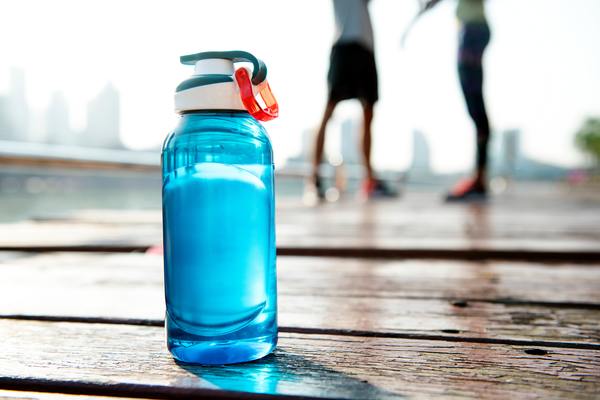
Final pro tips
You can take control of your health as you pair your physical fitness with healthy eating. Your fitness journey can start today. No, it is not easy, but it is worth it. All you have to do is start.
Here are some final words of inspiration from leading health experts:
“Always consume in moderation! Eating too much can counteract the hard work you put in at the gym.” — Alejandro Chaban, Founder and CEO of Yes You Can
“Sit down, do research, and plan. . . You will quickly find that maintaining balance is fairly easy with some planning.” — Fuad Hasanovic of Nutra Collagen
“If your goal is to lose fat and you are about 30 percent body fat, eat your protein alone. If you are trying to build muscle/get lean and are below 30 percent body fat, then you want twice the amount of protein in carbs.” — Kyra Williams, NASM certified Personal Trainer and Metabolic Effect Nutrition Specialist
“About 20 percent of daily fluid intake usually comes from food and the rest from drinks.” — Nathan Sports
“Consuming a post-workout meal with both protein and carbs will enhance glycogen storage and muscle protein synthesis.” — Olo Onnuma, Certified Personal Trainer based in Raleigh, North Carolina
“The main objective of your pre/post-workout meal is to provide your body with the proper nutrients for recovery and maximize the benefits of training.” — David de Ponte Lira, founder of FullMusculo.com
The Top Fitness Centers Companies

The Top Fitness Centers Companies
Related Articles
Fitness Centers
The Ultimate Fall 2019 Health and Fitness Gift Guide: 6...
February 24th, 2020
Fitness Centers
The 3 Best Ab Exercises: 5 Experts Weigh In
February 24th, 2020
Fitness Centers
Taking Control of Your Physical Fitness on a Budget
February 24th, 2020
Get Our Newsletter - Be in the Know
Sign up below to receive a monthly newsletter containing relevant news, resources and expert tips on Fitness Centers and other products and services.
We promise not to spam you. Unsubscribe at any time. Privacy Policy