5 Automotive Trends to Be Aware Of in 2021

Last Updated: March 17th, 2021
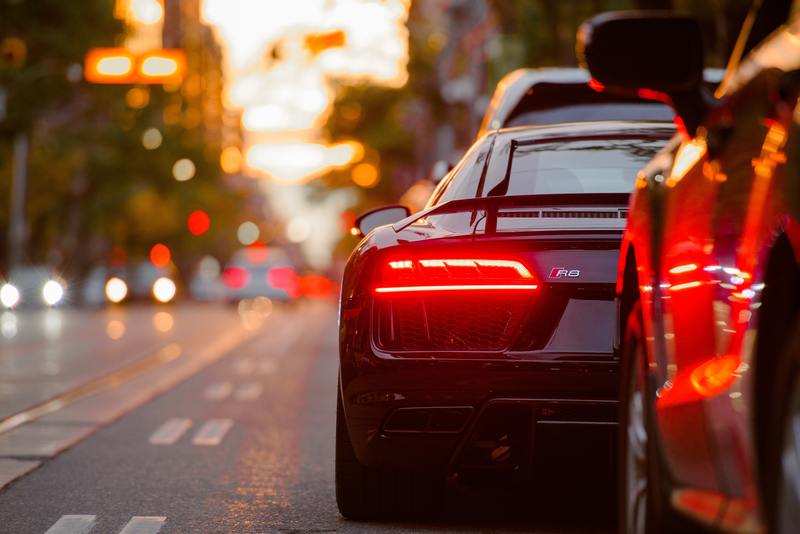
Car engines roared to a stop at the announcement of a global pandemic in 2020. Companies employed work-from-home policies to encourage public safety and stop the spread of the COVID-19 virus. Cars sat lying in driveways and garages as rush hour traffic slowly disappeared.
The automotive industry faced unique circumstances in 2020. Car dealerships quickly pivoted selling strategies amid government-mandated shutdowns. Automobile factories switched to producing medical equipment rather than vehicles.
The year 2020 closed with a 15 percent drop in new vehicle sales in the United States. In the years to come, statisticians and health experts will continue to evaluate the effects of this global crisis.
The question many people are asking now is "how will the events from 2020 affect 2021?"
What changes and trends can we expect in the automotive industry?
Together with leading automotive experts, we’ve outlined some of the biggest trends to impact car brands, dealerships, and consumers in 2021. Trends focus on autonomous vehicle progression, car inventory and sales, the digital vehicle buying experience, electric vehicle advancement, and new vehicle technology.

Key Takeaways
- Although interest in autonomous vehicles continues to grow, fully autonomous vehicles will not be available in 2021.
- Look for new vehicle incentives later in the year as dealerships restock inventory.
- Pandemic restrictions have shifted focus towards the digital car-buying experience. Dealerships should evaluate their digital and physical car-buying strategies.
- New environmental initiatives and government incentives are expected to fuel the electric vehicle market.
- 5G connectivity on the Internet of Things will help improve automaker processes and provide new connectivity tools for drivers.
Slow and steady progress for autonomous vehicles
Many car brands have joined the race to create the first autonomous vehicle. However, experts predict that a fully autonomous vehicle will not hit the market for at least another 5to 10 years. Investing in autonomous solutions is expensive and risky especially during uncertain economic times. Ethical issues continue to be a major obstacle for programming an autonomous vehicle to keep car passengers and other road occupants safe. John Vincent, senior reporter for Autos at U.S. News & World Report, comments on the future of autonomous vehicles.

John Vincent
Automotive Expert
Expert Insight
"While the phrases 'autonomous vehicle' and 'self-driving car' generate substantial buzz, there are no self-driving vehicles for sale today. Despite the language used by some automakers, there will not be self-driving vehicles available in 2021, or 2022, or even 2023. Today, we have some very sophisticated driver assist systems, such as lane-centering, lane-change assist, and adaptive cruise control with stop-and-go functionality. They can work together to help drivers; however, the driver has to remain engaged and ready to assume complete control. That will be the case for the better part of the next decade.”
Several new vehicles have autonomous settings such as lane departure, collision avoidance, adaptive cruise control, street sign recognition, etc. These features still require your attention but allow for sensors on the road for improved safety.
Some auto manufacturers such as Tesla, Cadillac, and Audi currently sell car models with an autopilot feature. Autopilot enables cars to operate independently of the driver within the artificial intelligence guidelines. However, these cars are not equipped to use autopilot in all weather conditions and terrains without a driver behind the wheel. Consumers interested in autonomous vehicles may choose to upgrade to a car with self-driving features. Just be aware that cars with autonomous settings are often much more expensive than the basic models.
Replenishing inventory and restoring incentives
The 2020 COVID pandemic forced many automakers to shift production towards medical equipment. During the initial spike, car dealerships offered major incentives in fear that economic recession would later impact car sales. However, car sales began to pick back up towards the end of the summer.
The low inventory will have a direct impact on both dealerships and consumers. Unlike the recession in 2008, consumers are still buying cars at a steady level. Dealerships will benefit from this trend with a greater overall profit from the cars they do sell. The overall quantity may be lower so the revenue might still be lower compared to previous years.
Joe Akers, Director of Operations for Cowles Nissan and Ford in Virginia, address vehicle supply projections for 2021.

Joe Akers
Automotive Expert
Expert Insight
“New vehicle inventory, whether traditional or electric, remains an issue. Most new vehicle lines are in short supply. These historically low inventory levels have allowed the manufacturers to get away from extremely aggressive incentives on vehicles that were available at the start of COVID (ie: 0% APR for 84 months). The manufactures simply don't have to offer these incentives anymore since there is a limited supply of new vehicles available, and COVID is no longer as uncertain as it was in April. I suspect we will see appealing or notable buying incentives again as we move into 2021 and inventory levels are finally able to outpace demand.”
As of January 2021, major car manufacturers are experiencing a chip-shortage crisis because of a redirect in chip supply to other consumer products such as smartphones and gaming devices. Semiconductor chips are used to power critical vehicle components such as the brakes and power steering. The chips are also used in infotainment systems. High-end models with complex interworking require more semiconductor chips to operate. Many automotive companies will experience a revenue loss due to the chip shortage such as Honda, Nissan, General Motors, and Ford. The total global loss could amount to over $60 billion in revenue for the auto industry.
Toyota is the only automaker to report an excess chip supply to cover the next four months of production.
Some car companies have had to shut down manufacturing facilities until the chip shortage has been resolved. This will put a strain on automakers seeking to recover from the pandemic sales drop. Consumers can expect to see delays in vehicle launches for new 2021 models. Experts predict that the inventory shortage will be resolved by mid-year.
The era of digital car buying
A concern for safety is a driving factor of the digital car-buying market. Limiting the amount of face-to-face interaction helps incentivize a safe transaction. However, consumers still need peace of mind that they are making the right decision before buying a car. That’s why car dealerships are diversifying their sales techniques to include virtual showing, online car building, and quick response customer service. Gina Callari, COO of Evox Images and RelayCars, discusses predictions for the future of digital car-buying.

Gina Callari
Augmented Reality Expert
Expert Insight
“People will be more reluctant to go to a dealership. By researching cars ahead of time, consumers will be demanding informational and dealer websites to show more of an experience to help them decide on their purchase. I expect to see more engagement and interactivity as far as imagery and content. Just as healthcare, real estate, and e-commerce industries have adopted augmented reality, AR will have a breakthrough with automotive by allowing users to see the cars, full scale, in their driveways and garages.”
Even after the vaccine is administered, we are likely to see the digital car-buying market continue to grow because of convenience. The opportunity to find the perfect vehicle without spending hours at a car lot will create demand among millennials. Consumers may spend more of their time online researching vehicle speciations.
However, according to an analysis by Mckinsey & Co, car dealership experience is still the number one factor in the car-buying process. Although dealerships should strategically position themselves online, they should also make changes to welcome back customers into the showroom. Until VR or AR can fully replace the physical experience of seeing a car, we may not see a huge shift in how consumers make the final decision to purchase a car. The younger generation may also be more inclined to make the transition from dealership purchase to online.
Steering consumers towards electric vehicles
According to a recent webinar given by J.D. Power, COVID hasn’t influenced consumers to buy more electric or plug-in cars. Consumers continue to purchase diesel and traditional hybrid vehicles. The electric car market faces obstacles such as a lack of charging stations, high prices, and experimental technology. Currently, government incentives may be the only factor strong enough to help grow the electric vehicle car market.
Sustainability initiatives are pushing more auto manufacturers to produce eco-friendly vehicles. Companies producing trucks and SUVs must pivot to produce vehicles that are both large and sustainable. For example, Jeep is releasing a new electric vehicle version of the Jeep Wrangler. Jeep also plans on releasing other hybrid models by the year 2025. However, auto manufacturers must balance these new initiatives with current customer demand to remain profitable.
Lauren from the Car Coach foresees a shift in electric vehicle production due to the corporate average fuel economy standards.

Lauren Fix
Automotive Expert
Expert Insight
“In 2021, manufacturers will be producing electric vehicles in order to meet the corporate average fuel economy (CAFE) as federal fines could be excessive overtime. Manufacturers are not making a profit off of these vehicles, and they’re in business to make money. If they’re not making money and are forced to produce cars that don’t produce a profit, it will only hurt their bottom line which will reduce their advancement in technology and employment.”
The new corporate average fuel economy (CAFE) standard is set at a 1.5 percent increase per year. Automakers are expected to increase fuel economy and decrease carbon emission by 1.5 every year. These regulations are set in place from 2021–2026. This new goal is lower than the standards set in previous years. However, the small margin continues to put pressure on automotive companies to create reliable vehicles with fewer environmental impacts.
Other emission reduction initiatives are expected to follow the new U.S. presidential administration. The administration plans to deploy close to 500,000 charging stations across the United States to make charging more accessible. Other future initiatives include replacing the federal vehicle fleet with electric models and increasing the electric vehicle tax credit for consumers. A prospective car buyer may want to consider some of the upcoming incentives for electric vehicles.
Increased connectivity with the Internet of Things
The pandemic sped up the need for better and more far-reaching coverage for businesses and personal communication. Companies are rolling out 5G technology and networks to cities across the United States. More devices can connect to the new 5G network improving the reach and signal of device communication.
In the coming year, car infotainment and communication systems will experience major improvements by allowing drivers to access features in more rural destinations. Drivers can expect better integration among their smartphones and car infotainment systems along with increased Wi-Fi availability.
Many drivers already enjoy the luxury of controlling their vehicles through smartphones. Through your phone, you can lock, unlock, and start your car. Consumers may witness increased app control and vehicle notifications such as for car maintenance. The ability to monitor your vehicle remotely is another benefit of IoT connectivity. Drivers can receive notifications if someone tries to enter their vehicle without proper authorization.
On the auto manufacturing side, the Internet of Things provides an opportunity to improve operational efficiency. Car companies can manage and analyze their production process through connected AI devices. This will help companies pinpoint weaknesses in the supply chain and production plants.
Staring at the road ahead
Despite a tough year for automakers, top car companies continue to innovate and strategize to combat the unique consequences of 2020. Automakers seek to put drivers in affordable vehicles while minimizing environmental risk. The increased connectivity of IoT and new 5G networks is speeding up the adoption of new vehicle technology.
Consumers in the market for a new car should consider the effect of 2021 automotive trends on their car buying experience. The second half of 2021 may be a better time to purchase a new vehicle when automakers can catch up with inventory shortages and dealerships bring back incentives.
Top Automotive Brands
Now is a great time to start researching some of the best car brands and models. Get started by reading verified customer reviews and learning from expert brand reviews.
Discover Your Ideal VehicleThe Top Car Brands Companies

The Top Car Brands Companies
Related Articles
May 21st, 2021
Car Brands
Top 5 Car Brands of 2021
May 15th, 2021
Get Our Newsletter - Be in the Know
Sign up below to receive a monthly newsletter containing relevant news, resources and expert tips on Car Brands and other products and services.
We promise not to spam you. Unsubscribe at any time. Privacy Policy